Jozini Summer 2026
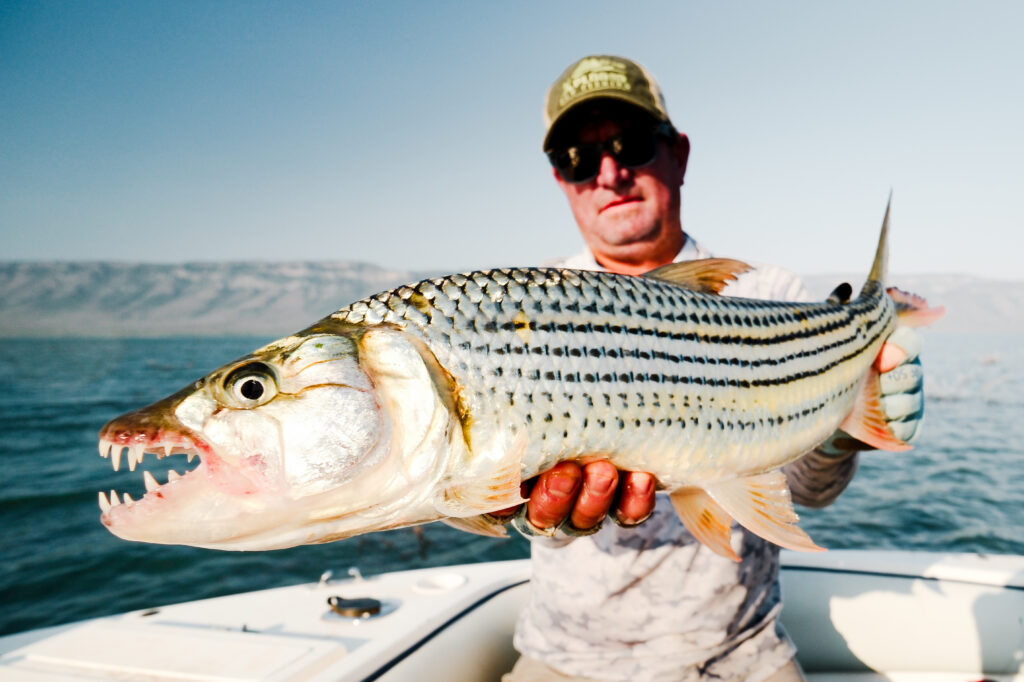
Jozini Dam Report: Summer 2026
Fly fishing for tigerfish in Africa has long drawn anglers from both home and abroad. Destinations like the Zambezi River often spring to mind, along with the travel, planning and expense that come with fishing these iconic waters.
But South Africa has an exceptional tigerfish destination of its own. Jozini Dam offers the chance to target one of Africa’s most formidable freshwater predators, all while surrounded by the remarkable wildlife and landscapes that make this part of the country so special.
Recently, our team had the opportunity to take part in the Royal Jozini Tigerfish Classic, a competition that brings together landowners and friends of the Royal Jozini Game Reserve for two days of tigerfish fishing.
We arrived expecting explosive takes and aggressive fish. While tigerfish certainly have a reputation for attacking baitfish patterns with ferocity, they can be surprisingly technical, often requiring patience and a willingness to adapt. Our few days on Jozini proved exactly that.
We managed to land fish consistently, but finding the right combination of fly, line and presentation made all the difference.
Finding the Right Approach
Our morning sessions proved productive when fishing sparse Clouser patterns tight to the margins and around structure. We used the RIO Outbound Float/Hover/Intermediate, and the Rio Predator Elite Warmwater F/H/I lines to present flies effectively in the shallower water, resulting in some solid hookups, although a number of fish managed to throw the hook before reaching the boat.
As the afternoon lull set in, we changed our approach. Bulkier brush flies became the preferred option, paired with the RIO Elite Warmwater Predator Float/S3/S5 line. This setup allowed us to present larger patterns accurately around deeper structure and along the main channels.
The line’s hinging effect was particularly useful. Rather than having the entire line sink and pull the fly directly into snags, the combination allowed us to control the presentation and keep the fly working in targeted areas. In water where fish hold close to submerged structure, that control can be invaluable.
During the final hours of the day, we switched back to the Float/Hover/Intermediate setup and returned to the shallows, where we found fish again.
The takeaway was clear: conditions and fish behaviour changed throughout the day, and being prepared to change with them was essential.
Choosing the Right Rod for the Conditions
The trip also gave us a good opportunity to compare our NRS 7wt and 8wt setups across different conditions.
The 8wt came into its own during the windier afternoons, when casting larger flies and managing heavier lines required a combination of power, range and accuracy. In contrast, the calmer morning conditions suited the 7wt, allowing for lighter presentations around the margins.
We also had the chance to put a new rod through its paces: the Redington Big Game 8’3″ 8wt.
This short, stiff rod impressed us when applying pressure to larger fish in dense structure. Its compact length and powerful action offer plenty of backbone, while making accurate casts at close range feel controlled and deliberate.
We see real potential for this style of rod across a range of South African fisheries and species. Jozini was a promising starting point, and we’re looking forward to exploring its applications further.
Getting the Bite Wire Right
One part of our setup that proved its worth throughout the trip was our bite wire system.
We used a #8 power swivel connected to 35cm of 40lb RIO Bite Wire, finished with a RIO Twist Clip. It’s a straightforward arrangement, but one that delivered where it mattered.
The bite wire held up impressively throughout repeated encounters, while the Twist Clip made changing flies quick and easy. When switching between sparse Clousers and bulkier brush flies, being able to change patterns without rebuilding the entire connection saved valuable time and allowed us to respond quickly to changing conditions.
When targeting tigerfish around structure, confidence in your connections is essential. A reliable bite wire setup gives you one less variable to worry about when a fish commits.
A Strong Result for the Team
Xplorer finished sixth overall, a result we were pleased with as a fly only team in a field where many competitors also found the fishing challenging.
The competition was a good reminder that success on Jozini isn’t simply a matter of finding aggressive fish and putting a fly in front of them. Reading the conditions, selecting the right line, adjusting your presentation and having tackle suited to the task all play an important role.
Beyond the fishing, we thoroughly enjoyed our time at Royal Jozini. The accommodation was excellent, the hospitality was warm, and the camaraderie throughout the event made it a memorable experience.
A big thank you to the team at Royal Jozini for the invitation and for hosting a fantastic event. We had a great time on and off the water, and we’re already looking forward to returning next year.